Ishihara Test Answers and Scoring
The answers to our 20 plates, what people with each type of colour blindness see, and how the real Ishihara test is scored.
Answer key for our 20 plates
Take the test first: reading the answers before you start makes the result meaningless. The table is generated from the same data the test uses, so it always matches the plates.
Answers for each plate; "nothing" means the number is expected to disappear.
| Plate | Typical vision | Red-weak (protan) | Green-weak (deutan) | Blue-yellow (tritan) | Tests | Fades at |
|---|---|---|---|---|---|---|
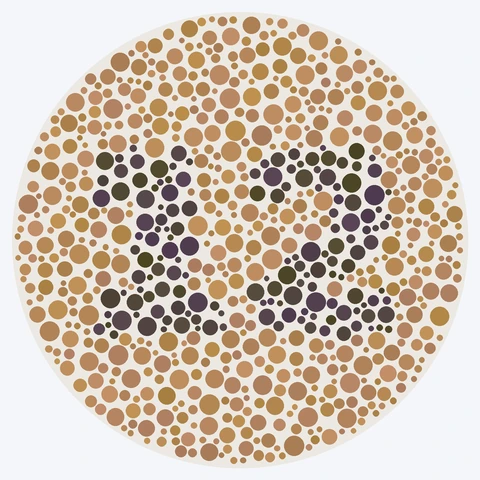 1 | 12 | 12 | 12 | 12 | Control (everyone) | — |
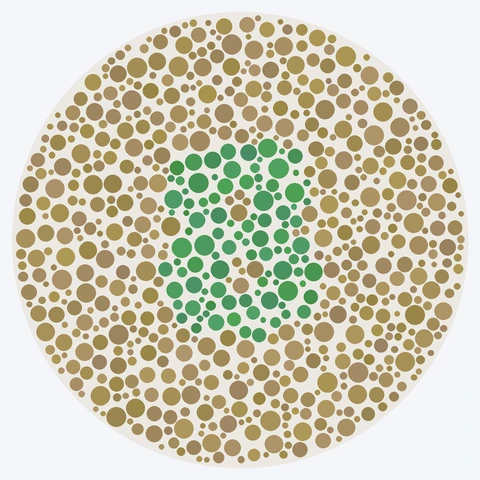 2 | 8 | nothing | 8 | 8 | Red-green screening | 84% |
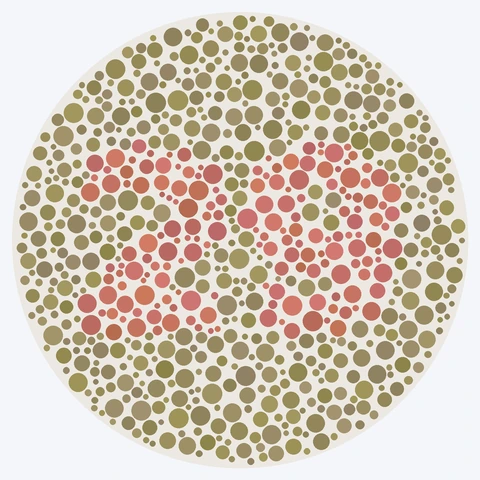 3 | 29 | 29 | nothing | 29 | Red-green screening | 83% |
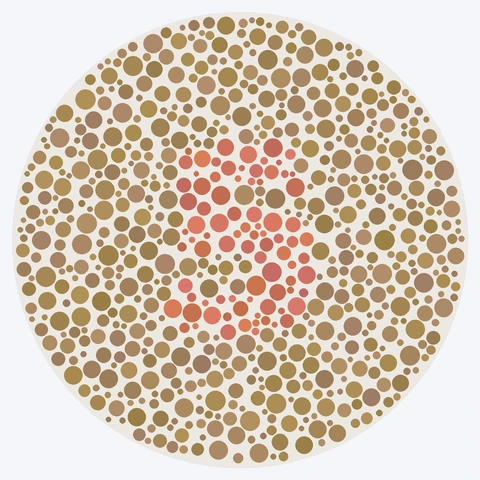 4 | 5 | nothing | nothing | 5 | Red-green screening | 83% |
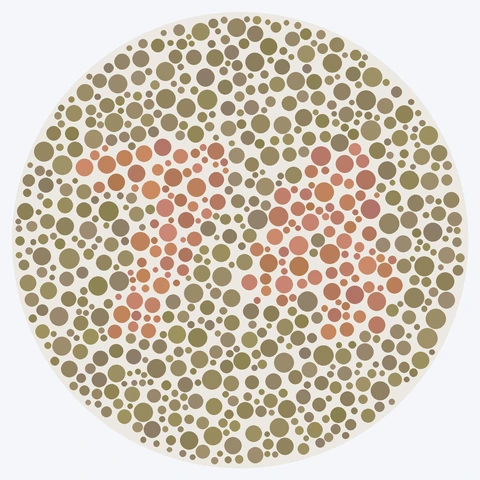 5 | 74 | nothing | 74 | 74 | Red-green screening | 76% |
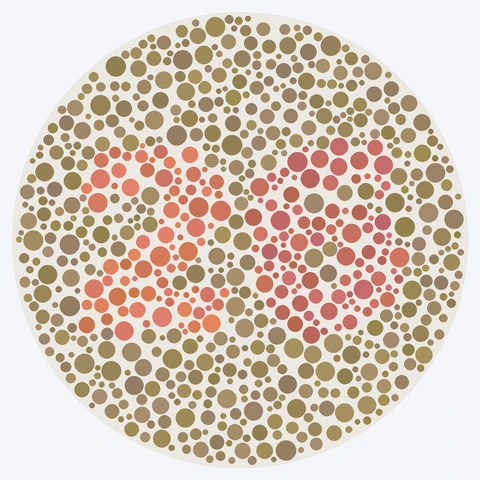 6 | 26 | 6 | 2 | 26 | Protan / deutan | 83% |
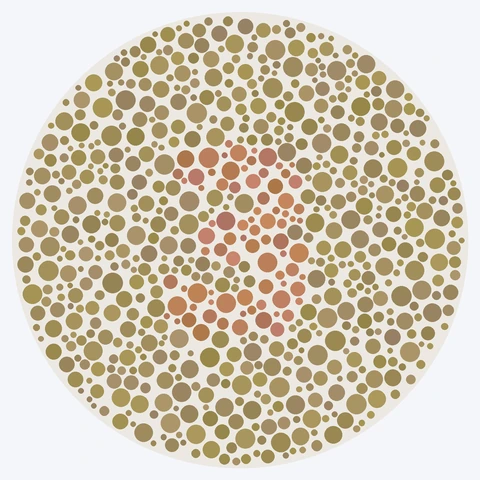 7 | 3 | 3 | nothing | 3 | Red-green screening | 71% |
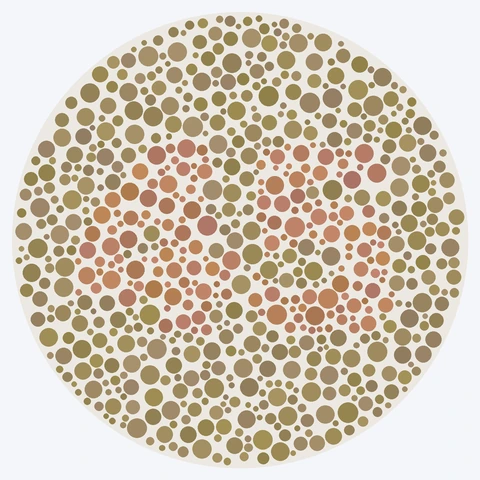 8 | 45 | nothing | nothing | 45 | Red-green screening | 66% |
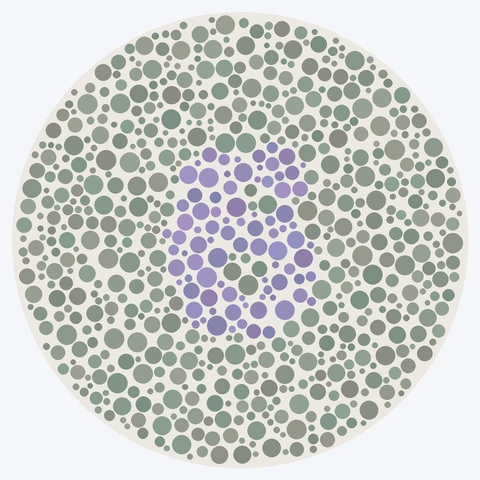 9 | 6 | 6 | 6 | 6 | Blue-yellow | — |
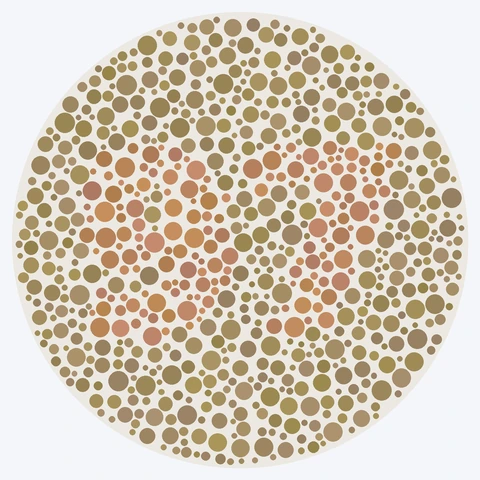 10 | 97 | nothing | nothing | 97 | Red-green screening | 64% |
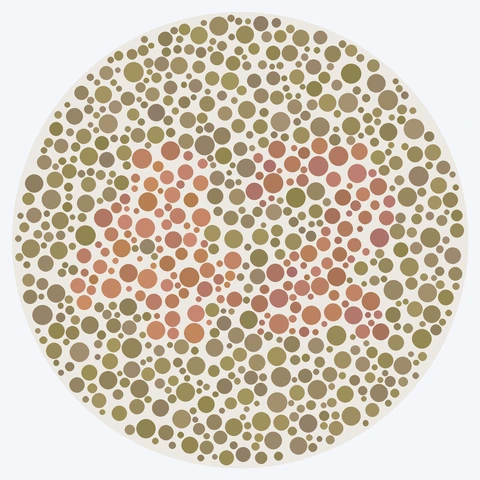 11 | 42 | 2 | 4 | 42 | Protan / deutan | 71% |
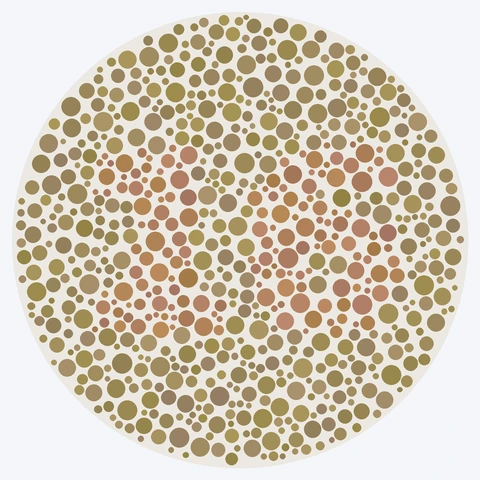 12 | 16 | nothing | nothing | 16 | Red-green screening | 58% |
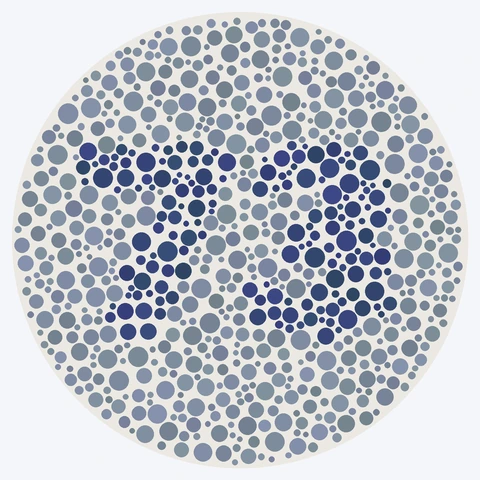 13 | 73 | 73 | 73 | 73 | Control (everyone) | — |
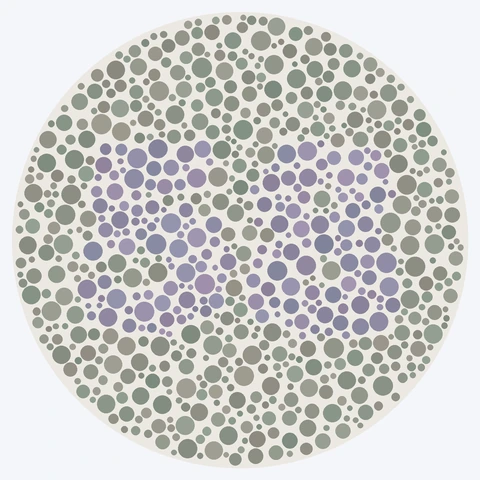 14 | 58 | 58 | 58 | nothing | Blue-yellow | 91% |
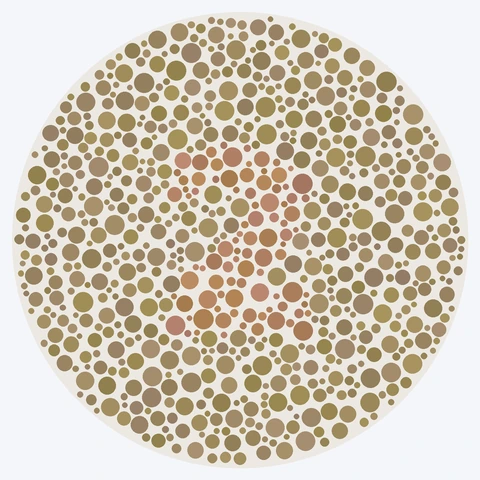 15 | 2 | nothing | nothing | 2 | Red-green screening | 53% |
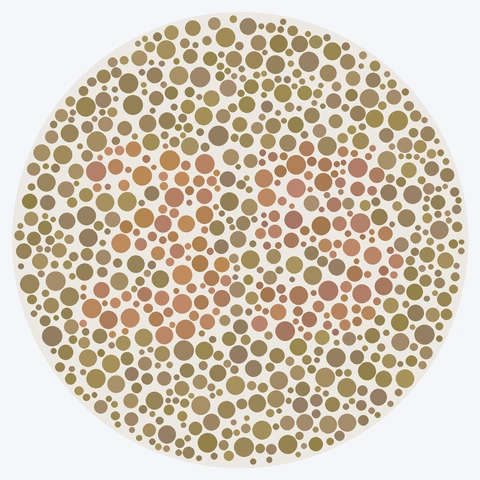 16 | 35 | nothing | nothing | 35 | Protan / deutan | 58% |
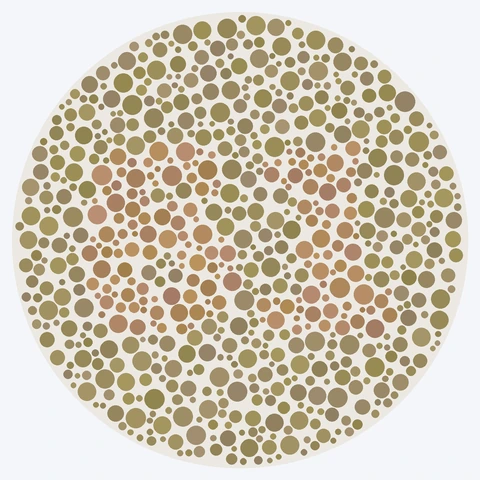 17 | 61 | nothing | nothing | 61 | Red-green screening | 49% |
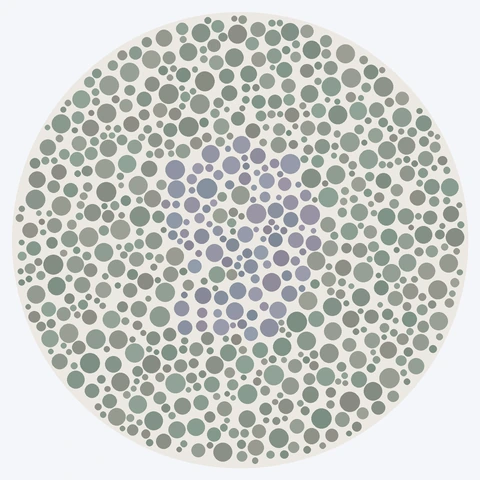 18 | 9 | 9 | 9 | nothing | Blue-yellow | 75% |
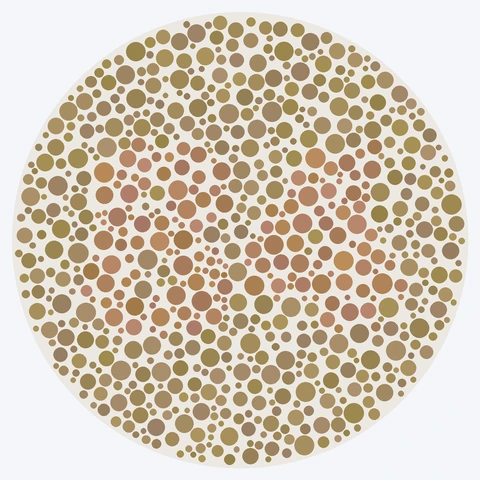 19 | 84 | nothing | nothing | 84 | Red-green screening | 46% |
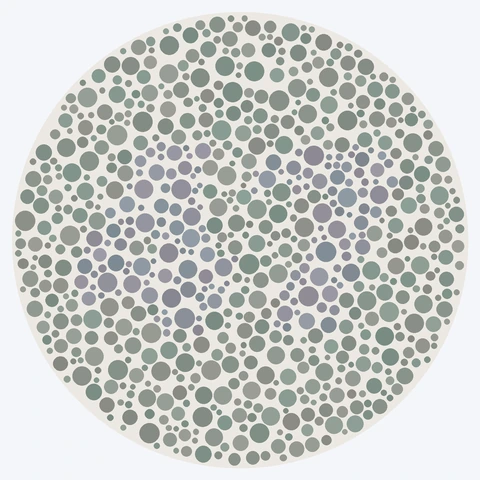 20 | 47 | 47 | 47 | nothing | Blue-yellow | 53% |
How to read the answer table
- Typical vision: the number most people read.
- Red-weak and green-weak: what someone with a strong protan or deutan deficiency (dichromacy) is expected to read.
- Fades at: the simulated severity at which the figure becomes too faint to see. A plate that fades at 50% is missed even by people with a moderate deficiency.
- Two-digit classification plates show one digit to red-weak vision and the other to green-weak vision. That is how the test tells protan from deutan.
How the Ishihara test is scored
The printed Ishihara test uses a simple count of correctly read plates. These are the thresholds given in the instructions that come with the test.
| Edition | Plates counted | Normal | Red-green deficiency |
|---|---|---|---|
| 38 plates | 1 to 21 | 17 or more correct | 13 or fewer correct |
| 24 plates | 1 to 15 | 13 or more correct | 9 or fewer correct |
What your score means
- Normal: you read nearly all plates. One or two misses on faint plates is common.
- Borderline: a score between the two thresholds (14 to 16 of 21 in the full edition) is rare and needs a retest or another test.
- Red-green deficiency: you missed many plates. Classification plates then suggest protan or deutan; a clinic can confirm the type and severity.
How Ishihara results are written down
Clinicians usually record the edition and the score, for example "Ishihara 38: 21/21" or "Ishihara 24: 8/15, deutan". The plates read the colour-deficient way are often listed too, and whether both eyes or each eye was tested.
What to do after a failed screening
Book an eye examination. An optometrist can confirm the type, measure severity with tests such as the Farnsworth D-15 or an anomaloscope, and check for any eye condition if the loss is new or affects one eye.
Scoring questions
What is the passing score for the Ishihara test?
For the 38-plate edition, 17 or more of the first 21 plates read correctly. For the 24-plate edition, 13 or more of the first 15. Some employers set their own, stricter rule, such as no errors.
Which Ishihara score indicates a colour vision defect?
13 or fewer correct of the first 21 plates in the 38-plate edition, or 9 or fewer of 15 in the 24-plate edition.
Why can't I find the real Ishihara answers in a PDF here?
The Ishihara plates and manual are copyrighted. We publish answers only for our own original plates.
I saw a different number from the answer. Am I colour blind?
Not from one plate. Look at the pattern across all plates, check your screen settings, and retake the test. Several misses on red-green plates is what matters.
Haven't taken the test yet?
Take the colour blind test