Ishihara Plates Explained
The Ishihara test comes in editions of 38, 24 and 14 plates, and its plates do different jobs: from a demonstration plate everyone reads to plates that only colour-blind people can see.
What an Ishihara plate is
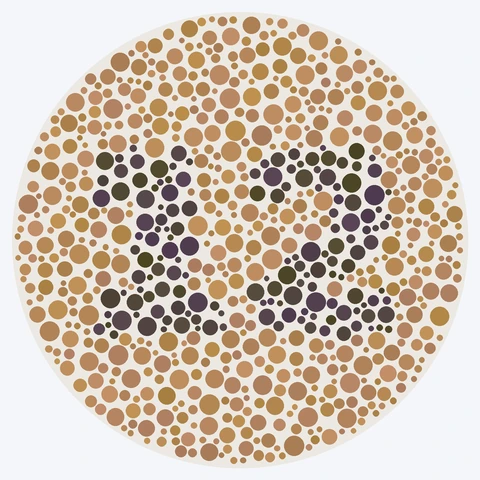
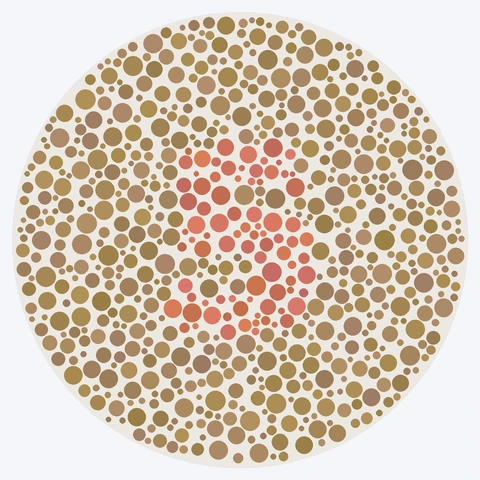
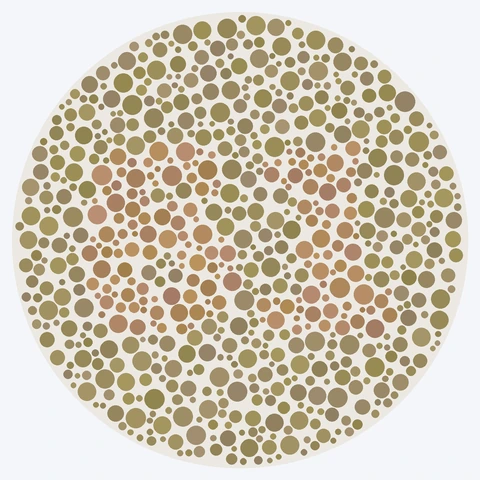
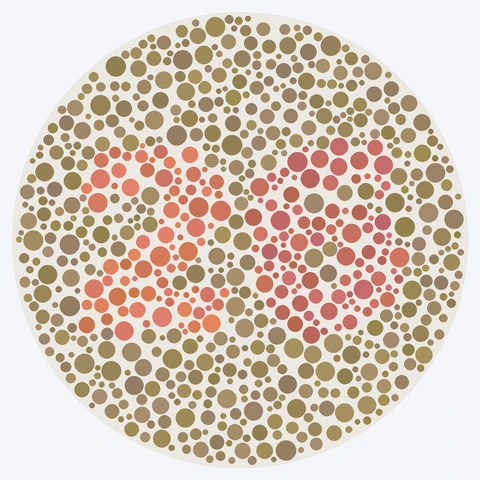
An Ishihara plate is a circle filled with dots of different sizes. A figure, usually a one- or two-digit number, is drawn in dots of one set of hues and the background in another. The two sets look clearly different to typical colour vision and alike to red-green colour-deficient vision.
How many plates are in the Ishihara test?
The full test has 38 plates. The 24-plate and 14-plate editions are shorter versions for screening.
| Edition | Plates | Includes tracing plates |
|---|---|---|
| Full edition | 38 | Yes |
| Standard edition | 24 | Yes |
| Concise edition | 14 | Yes |
Types of Ishihara plates
Each image below is one of our own plates showing the same idea.
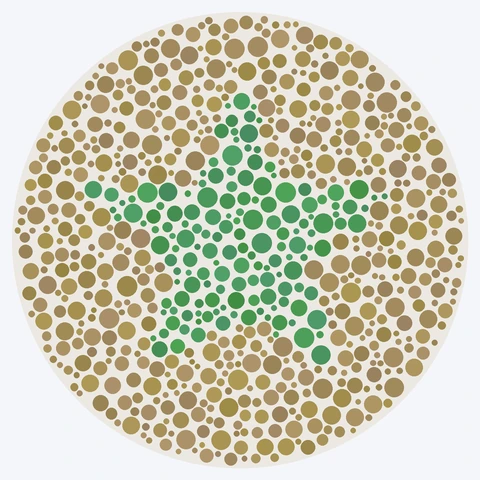
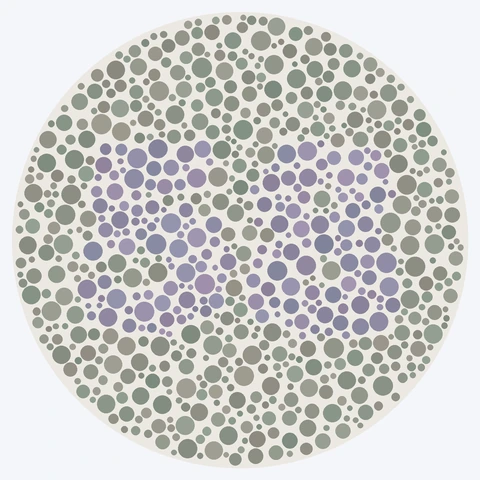
Numbers, shapes and paths
The main plates use numbers. People who can't read numbers, including young children, follow winding paths across the plate with a finger or a brush instead. There is no standard Ishihara edition with letters or animals; tests with shapes and pictures are separate tests designed for children.
Why online Ishihara plates look different
Images of the printed plates on websites are scans of a copyrighted book. Scanning and screens change the colours, so the plates may not work as designed. Purpose-built screen tests, like ours, calculate their colours for screens instead.
Plate questions
What does the first Ishihara plate show?
The first plate in every edition is a demonstration plate that everyone, including colour-blind people, should read. It shows the person how the test works and checks they understand it.
Why do I see a number where others see none?
That is a hidden-digit plate. It is designed so that red-green colour-deficient vision picks out a number that typical vision misses.
Are all Ishihara tests the same?
The editions share plates but differ in length. Online copies vary a lot in colour quality, so two "Ishihara tests" on different websites can give different results.
Try our plates for yourself.
Take the colour blind test